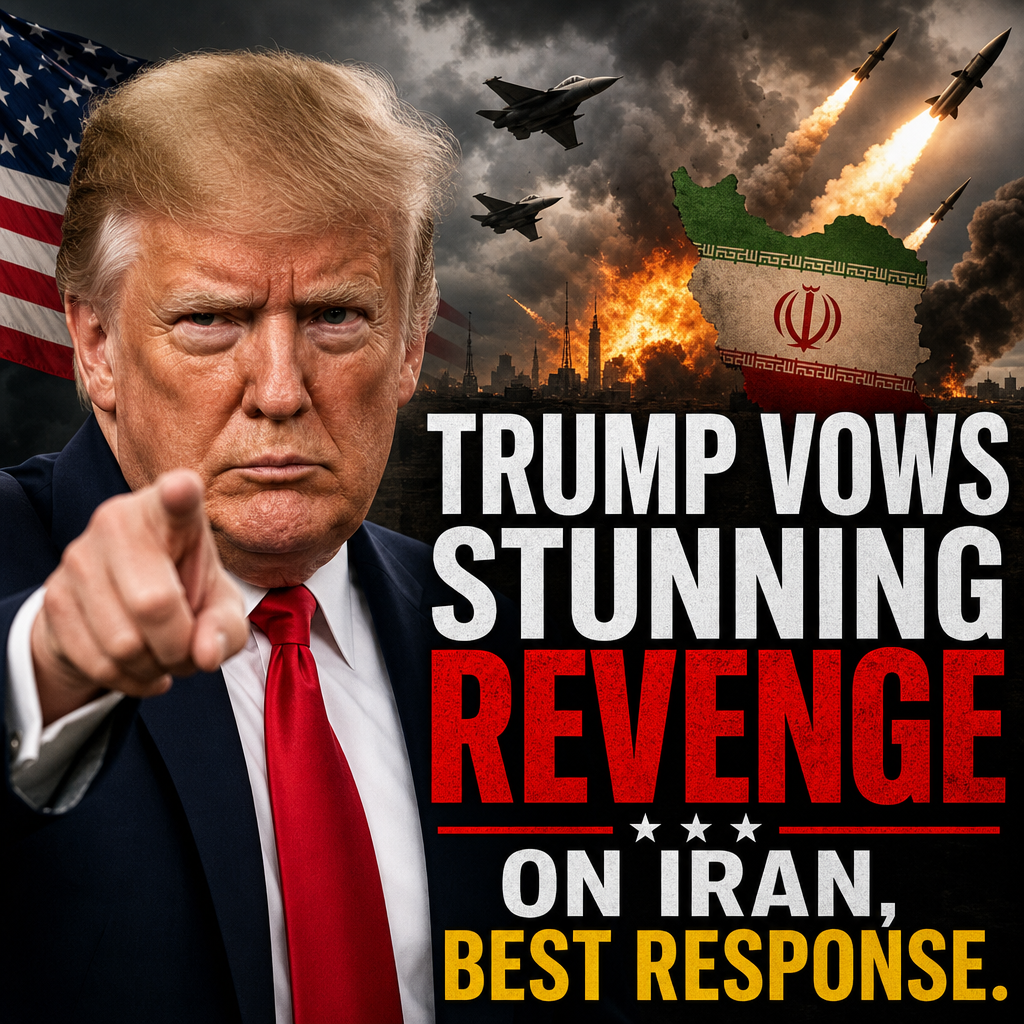
Trump Vows Stunning Revenge on Iran, Best Response


Trump Vows Stunning Revenge on Iran has reignited a familiar and dangerous cycle: a hard-line threat from Washington, a defiant response from Tehran, and a world left wondering whether the next move will be political theater or the start of something far more serious. Whatever one thinks of the former president’s language, the bigger issue is not the tweet, speech, or headline itself — it is what kind of strategy, if any, sits behind it.
The latest wave of attention around Trump’s remarks comes at a moment when tensions involving Iran remain deeply tangled with Gaza, regional proxy conflicts, shipping security, nuclear concerns, and domestic U.S. politics. Across the sources reviewed, the tone differs, but the underlying anxiety is the same: confrontation may be easy to promise, yet much harder to control once it begins.



Why Trump’s Iran rhetoric still matters
Trump has long treated Iran as one of the clearest symbols of strength politics. During his presidency, he withdrew the U.S. from the nuclear deal, imposed sweeping sanctions, and ordered the strike that killed Qassem Soleimani in 2020. That history gives his current threats weight, because they are not being made in a vacuum. Iran knows he has already been willing to authorize dramatic action, and supporters believe that unpredictability can deter adversaries.
But deterrence and escalation are close cousins. That is where the concern begins.




RT’s framing, in line with its broader anti-Washington posture, tends to emphasize the volatility of U.S. power and the risk that American threats can trigger the very instability they claim to prevent. Al Jazeera, meanwhile, usually places these events in a wider regional context, where U.S.-Iran confrontation is not an isolated storyline but part of a larger web of conflicts stretching from Lebanon to Yemen to Iraq and Syria. Sky News often takes a more Western security-focused lens, asking what the move means for allies, shipping lanes, energy prices, and the likelihood of broader military involvement.
Taken together, those lenses point to the same reality: even a “stunning” threat is only as credible as the policy behind it.
The problem with revenge as strategy
“Revenge” may play well in political rallies, but it is a poor organizing principle for foreign policy. The term suggests emotion rather than objective. It implies punishment rather than a defined end state. If the goal is to stop missile attacks, deter proxy warfare, or prevent a nuclear breakout, then the response must be measurable, limited, and tied to a diplomatic path — not just punishing for punishment’s sake.
That distinction matters because Iran has historically responded to pressure in layered ways:
– by denying direct responsibility while supporting proxies;
– by escalating incrementally rather than through one decisive move;
– by using negotiations as cover, leverage, or both;
– and by framing U.S. threats as evidence that Washington cannot be trusted.
In other words, a blunter American threat may satisfy a domestic audience while making negotiations harder and regional actors more nervous.
What the best response to Iran looks like
If the question is what the “best response” should be, the answer is not softness, but discipline. A serious approach would combine deterrence, coalition management, and diplomacy, rather than relying on a single dramatic warning.
1. Deterrence that is specific, not theatrical
A credible response means clearly defining what actions would trigger consequences. That could involve attacks on U.S. personnel, missile strikes on allies, or direct threats to shipping. Vague promises of revenge invite miscalculation. Specific red lines, by contrast, can reduce uncertainty.
2. Support for regional de-escalation
The Middle East is already absorbing too many overlapping crises. Any U.S. policy that increases pressure on Iran without parallel efforts to calm neighboring fronts risks lighting new fires. That is especially true where proxy groups can act independently and where local governments are under intense strain.
3. A diplomatic channel, even if it is narrow
History suggests that even hostile rivals need off-ramps. A backchannel or intermediated dialogue does not mean surrender; it means avoiding a war neither side fully wants. Al Jazeera’s coverage often highlights the human and political cost of regional escalation, and that perspective is important here. Civilian populations, not slogans, absorb the fallout first.
4. Domestic honesty about costs
Sky News’ security-centric approach has one practical advantage: it forces a conversation about consequences. Any military or sanctions-heavy stance can affect fuel prices, trade routes, and alliance commitments. U.S. leaders sometimes speak as if pressure is cost-free. It is not.
A threat that may help politically, but not necessarily strategically
Trump’s hard language on Iran will likely satisfy supporters who view strength as clarity and ambiguity as weakness. It may also put pressure on rivals who prefer a more cautious American posture. But that does not automatically make it the best response to the problem at hand.
The evidence across the sources suggests a shared uncertainty: Iran is neither likely to be intimidated into total compliance nor ready to abandon its regional strategy simply because Washington raises its voice. That makes symbolic threats less useful than a coherent plan.
The most responsible response to Iran is neither appeasement nor theatrical revenge. It is a mix of firmness, restraint, and careful signaling — because once the rhetoric turns into action, the consequences rarely stay where politicians imagine they will.